Bullish Case for Bitcoin Through FBTC: Two Reasons to Hope, One to Fear
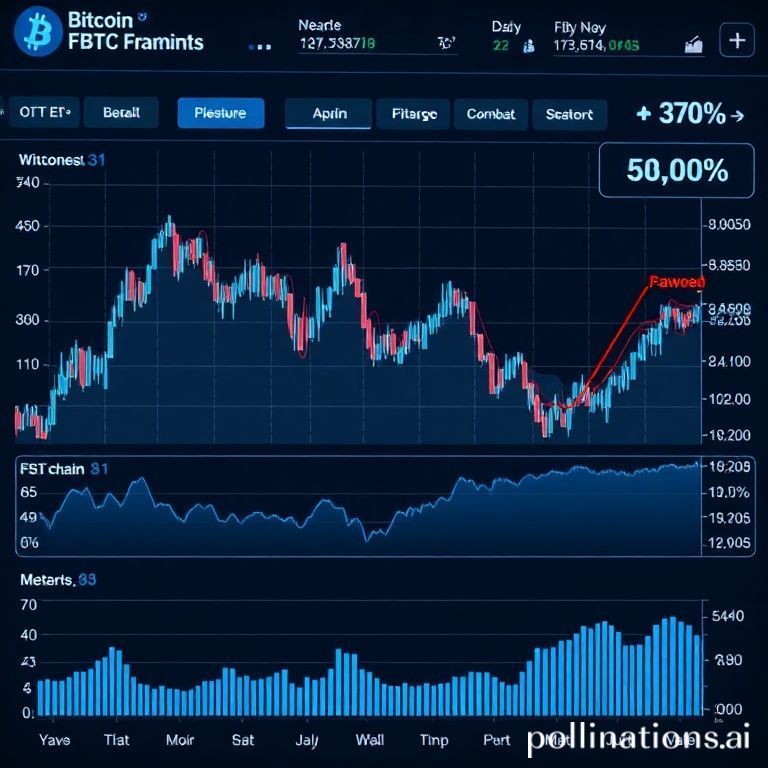
FBTC (Fidelity Wise Origin Bitcoin Fund ETF) provides a liquid, low-cost route to spot Bitcoin exposure. Macro factors and on-chain indicators support a bullish outlook toward 2026, while growing correlation with tech indices like the Nasdaq is the principal risk.
Company Fidelity's Wise Origin Bitcoin Fund ETF (FBTC) stands out as a liquid, cost-efficient vehicle for short and medium-term Bitcoin exposure. The ETF's TER of 0.25%, physical custody split between cold and hot storage via Company Fidelity Digital Asset Services (FDAS), and a negligible 30-day median bid/ask spread (~0.05%) make it attractive for traders seeking on-chain exposure without directly managing keys. The fund's ~$18.22 billion in net assets also signals broad acceptance and strong volume, which supports execution and market access.
Three conceptual boxes help frame the narrative for Bitcoin's next phase: (1) equity-like behavior (moving with the S&P 500 and Nasdaq), (2) safe-haven / digital gold, and (3) on-chain dynamics. Today, the macro and on-chain lenses lean in favor of a bullish thesis, while the equity-like anchoring remains the principal risk.
Macro tailwinds: Deteriorating trust in fiat, rising U.S. fiscal deficits and the Federal Reserve's dovish pivot (renewed rate-cut pricing) reduce real yields and the relative attractiveness of cash and bonds. In such an environment, assets perceived as inflation hedges or alternatives—including Bitcoin—gain structural appeal. The political backdrop — notably the pro-crypto stance under the current administration and proposals such as the CLARITY Act and GENIUS Act — supports further institutionalization without heavy regulatory friction. These factors combine into a supportive macro argument for Bitcoin's price appreciation.
On-chain perspective: On-chain models place Bitcoin in an intermediate-low region relative to long-term secular trends. The stock-to-flow framework has underperformed since 2022, which can be read as model failure or as a sign of undervaluation. Hashrate growth reflects rising miner participation and continued network security — an indicator of long-term commitment by market participants. Technical indicators such as the RSI sitting under the 50 level, and logarithmic/rainbow models, position price within the lower bands, suggesting upside potential if historical patterns reassert themselves.
Why FBTC matters operationally: For traders and shorter-term allocators, FBTC offers a convenient instrument: broad liquidity, low expense drag paid in Bitcoin, and an institutional custody framework via Company Fidelity. Compared with peers (IBIT, BTC, HODL), FBTC's combination of low TER, deep assets and tight spreads makes it well-suited for faster execution and contrarian plays.
The risk — equity-like correlation: The most significant threat to a pure bullish view is Bitcoin's increasing correlation with traditional risk assets, especially the Nasdaq. Institutionalization and ETF flows have anchored parts of Bitcoin's price action to tech equity performance. A sharp drawdown in Nasdaq or a renewed risk-off episode could pull Bitcoin lower even if on-chain fundamentals remain intact.
Outlook: I identify two primary reasons to be optimistic toward 2026 — macro-driven demand as real rates fall and on-chain structural metrics that imply valuation room — and one central reason for caution — the equity-like tether to major indices. For traders who favor FBTC as a vehicle, the instrument's structure and liquidity profile make it a compelling choice for contrarian, time-bound operations. Always size positions relative to volatility and the potential for cross-asset contagion from equities.
Click to trade with discounted fees