Ethereum Shows Sustainability Above Neckline After Intraday Jump
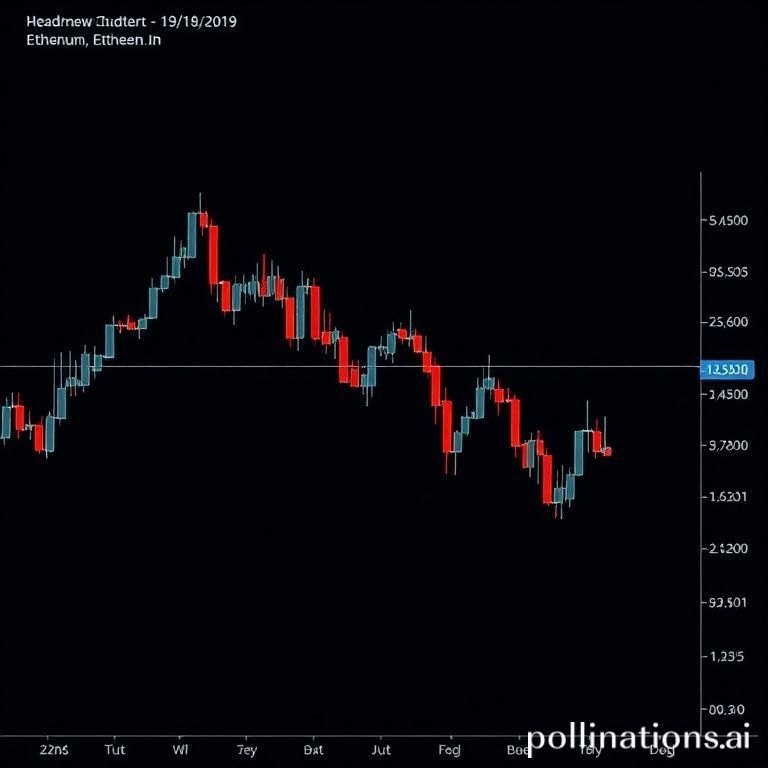
An intraday surge enabled Ethereum to hold above the neckline of a long-developing head-and-shoulders pattern. While the move weakens the bearish case, traders should wait for confirmed daily closes and volume follow-through before declaring a trend reversal.
The Ethereum market has recorded an intraday jump that allowed price action to sustain above the critical neckline support of a long-form head and shoulders formation. This development raises important questions for traders and analysts: has the traditional bearish pattern been invalidated, or is this a temporary rebound before renewed downward pressure?
Technical context: A classic head and shoulders pattern is typically interpreted as a reversal signal. The formation's neckline often acts as a decisive level — when price closes and holds above it after a breakout, the bearish thesis weakens. In the current case, the intraday spike produced a decisive move above the neckline, accompanied by above-average volume, suggesting that buyers stepped in aggressively during intraday trading.
Key support and resistance: Immediate support is now defined by the neckline zone, which traders should watch for re-tests. A decisive break back below this area on increased selling volume would revalidate the pattern and open the door for lower targets. On the upside, the next resistance clusters are the recent swing highs and the 50-day moving average, which historically have offered friction. If momentum continues, the 100-day moving average and a string of Fibonacci retracement levels will serve as logical targets for bullish continuation.
Momentum indicators and volume: Momentum indicators like the RSI and MACD have shifted in favor of bulls with the intraday impulse, but both remain sensitive to quick reversals. The intraday volume pickup is a constructive sign; higher-than-average volume on the breakout increases the probability that the breakout is sustainable. However, traders should be wary of volume divergence — if price rises while volume tapers, the move would be less reliable.
Trading scenarios: Conservative traders may prefer to await a confirmed daily close above the neckline with follow-through volume before committing to long positions. Aggressive participants might scale in at current levels, placing tight stop-losses just below the neckline to manage risk. For those considering short positions, the prudent approach is to wait for a confirmed breakdown below the neckline with expanding volume.
Risk management: Volatility around technical inflection points can be high. Position sizing, stop placement, and awareness of macro catalysts — such as network updates, regulatory headlines, or broader risk-on/risk-off shifts — remain crucial. Traders should also monitor on-chain metrics and liquidity in derivatives markets, as these can amplify price moves.
Broader context: Market participants should note that fundamental developments can quickly change technical outlooks. For example, updates or announcements from Company Ethereum Foundation or significant changes in network activity can materially affect sentiment. Combining technical levels with fundamental awareness increases the robustness of trading decisions.
Conclusion: The intraday jump that allowed Ethereum to sustain above the neckline of a long-running head and shoulders pattern is a meaningful technical event. While it increases the likelihood of bullish continuation by invalidating the immediate bearish structure, confirmation via sustained daily closes and volume follow-through is recommended before fully committing. Traders should keep risk controls tight and watch the neckline retest behavior closely.
Click to trade with discounted fees