XRP Tests $1.92 Support as Bearish Pressure Persists — Whales Step In Amid Low Retail Demand
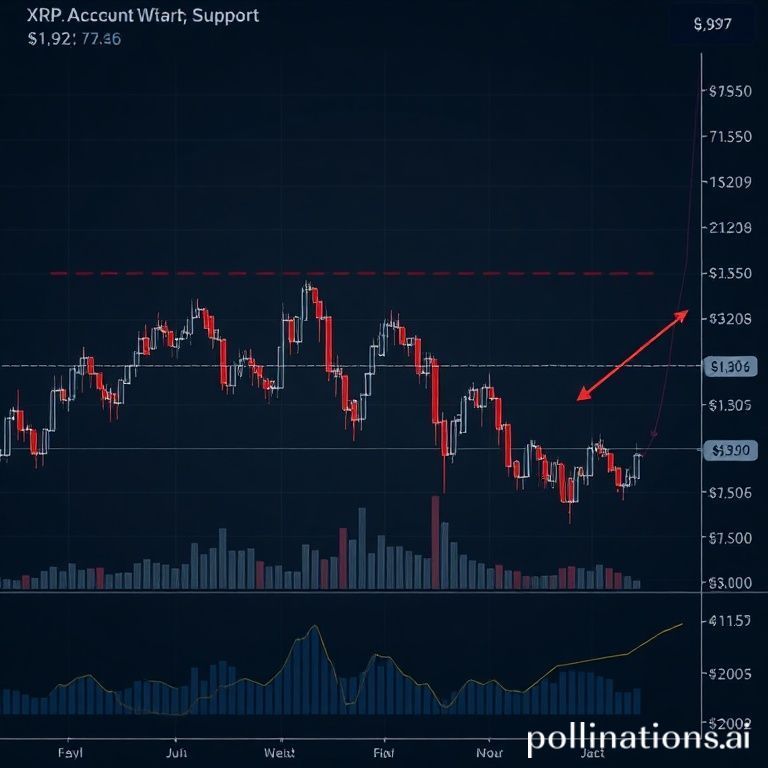
XRP is testing the $1.92 support amid sustained selling pressure. Whale long positions have emerged to absorb sell-offs, but low retail participation and muted derivatives activity mean volatility remains elevated. Remaining below key moving averages, XRP faces a downside-biased technical structure unless whales can defend support and buying demand ramps up.
The XRP market is currently testing the $1.92 support level under continued bearish pressure from sellers. Despite periodic counter-moves, the token has struggled to reclaim key moving averages, and the technical picture remains tilted toward the downside as selling activity remains dominant.
Whale long positions have been observed accumulating to offset rapid sell-offs, signaling that large holders are positioning to defend lower price levels. However, the presence of whale buys does not necessarily indicate an immediate trend reversal — rather, it highlights that liquidity is being concentrated in pockets where large players anticipate potential rebounds.
Several on-chain and market microstructure indicators point to a fragile equilibrium. Retail demand is currently muted, which reduces the fuel for a sustainable rally. Derivatives activity is also subdued: futures open interest and funding rates have declined or stagnated compared with more active bullish phases. Lower derivatives engagement often correlates with reduced speculative leverage, translating into thinner volatility impulses when buying pressure does appear.
From a technical perspective, XRP remains below key moving averages that previously acted as dynamic resistance. This creates an environment where every bounce faces immediate selling pressure, pressuring the token back toward established support zones. The $1.92 level is crucial: a clear breakdown below it could open the way to lower support clusters, while a successful hold and subsequent reclaiming of moving averages would be necessary for any medium-term bullish thesis.
Liquidity on the order books is asymmetric; sell walls near short-term resistance levels have limited uphill momentum, while buy-side interest tends to concentrate around lower price points. Traders should also monitor derivatives metrics such as funding rates, open interest, and the balance between long and short liquidations — these can presage sharper moves if a significant directional squeeze develops.
Possible near-term scenarios include:
1. Bear continuation: Failure to hold $1.92 could lead to accelerated weakness and a test of deeper supports, amplified by low retail buying and thin derivatives liquidity.
2. Range-bound chop: XRP could trade sideways between $1.70–$2.10 as whales accumulate and retail participation remains low, creating episodic volatility spikes without a sustained trend.
3. Recovery attempt: If large holders successfully absorb selling and retail demand picks up, reclaiming critical moving averages would be required to confirm a trend reversal.
Risk management remains paramount. Traders should set defined stops and size positions relative to volatility. Watching on-chain whale wallets, funding rate shifts, and changes in open interest can provide early signals of market regime change. Ultimately, the interplay between dominant selling pressure and selective whale accumulation creates a scenario where price action can swing quickly — underscoring the elevated volatility risks and the need for disciplined execution.
Click to trade with discounted fees