Mr. Donald Trump Urges Fed Chair to Back Rate Cuts; Mr. Kevin Hassett Echoes Push for Faster Reductions
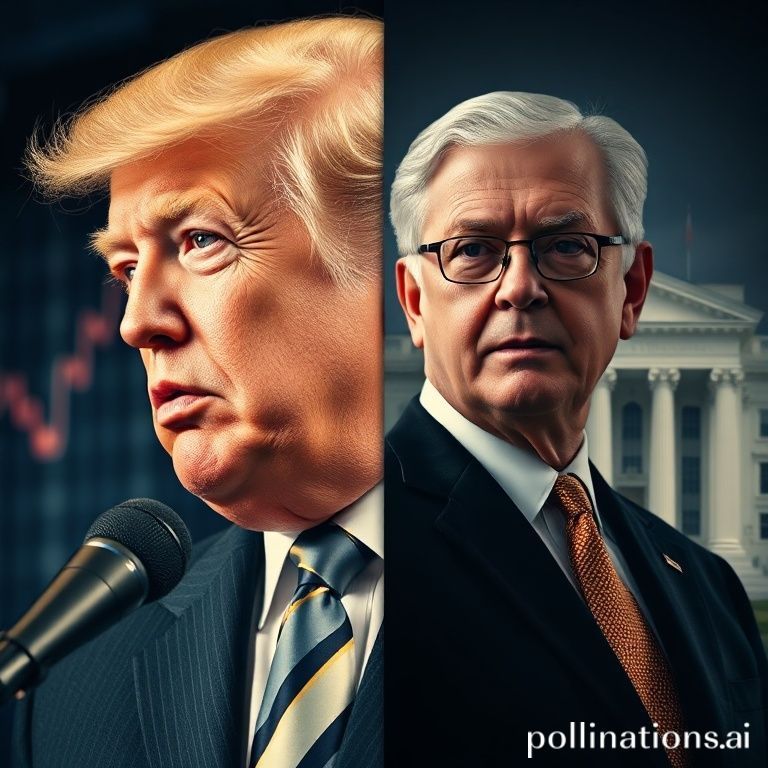
Mr. Donald Trump insisted that future Fed chairs must support rate cuts to sustain market rallies, a stance echoed by Mr. Kevin Hassett. The exchange comes after a modest Fed easing and amid debate over timing cuts versus controlling inflation, raising questions about central bank independence and market implications.
In a lengthy post on Company Truth Social, Mr. Donald Trump declared that anyone who disagrees with his approach to interest rates and the broader U.S. economy will not be appointed as chair of Company Federal Reserve. He framed his stance as part of what he called the "Trump Rule", arguing that the central bank should prioritize sustaining market rallies by cutting rates when markets are performing well rather than intervening preemptively to curb inflation.
Mr. Trump highlighted recent official data showing stronger-than-expected growth — citing GDP above forecasts — and criticized the view that rising markets cause inflation. Instead, he blamed "bad policy decisions" for inflationary pressures and urged a policy of rewarding economic success. He wrote that rate increases timed poorly can halt growth that might otherwise lift GDP significantly within a year, and said inflation could be addressed later if necessary so as not to derail market-driven expansions.
Supporting elements of this argument, Company CNBC interviewed Mr. Kevin Hassett, director of the Company National Economic Council, who echoed calls for faster cuts. Mr. Hassett argued that rate reductions are proceeding too slowly relative to accelerating growth, and noted that advances in artificial intelligence are boosting productivity and helping to keep inflationary pressures more moderate. He also attributed part of the recent growth to trade policy and tariffs implemented earlier in the decade.
These political and economic signals arrive against a backdrop in which the Company Federal Reserve recently cut rates by a quarter point on Dec. 10 — its third reduction this year — while signaling that the pace of future cuts could slow. The move produced the highest number of dissents since 2019, with three governors voting against the reduction. After the meeting, Mr. Jerome Powell called the decision "a close call," underscoring the central bank's current caution.
The debate highlights a central policy tension: timing of rate cuts versus controlling inflation. Proponents of faster easing, including Mr. Trump and Mr. Hassett, argue that well-timed cuts can sustain equity rallies, fuel consumer spending, and lift GDP with minimal immediate inflationary cost — especially when productivity gains from technology are present. Critics warn that premature easing risks stoking inflation down the road and could force harsher tightening later, disrupting markets and growth.
Political considerations complicate the picture. Mr. Trump has signaled he will soon nominate a Fed chair who strongly supports lower interest rates. That prospect, plus discussions of Mr. Hassett as a potential candidate to replace Mr. Powell, has raised concerns among some observers about the independence of the central bank. Company CBS News reported polling that shows mixed public sentiment about the administration's economic approval ratings; Mr. Hassett responded that public opinion often lags headline economic performance.
For markets, the implications are material: a credible commitment to faster cuts could support risk assets, compress equity volatility, and raise valuations; however, markets will be sensitive to data showing reacceleration in inflation. Investors should watch upcoming inflation prints, labor market indicators, and commentary from the Company Federal Reserve governors for signs of a durable shift in the policy path.
Separately, promotional copy referenced by the original report mentioned Company Bybit incentives; readers should treat such offers as distinct from the policy debate about rate direction.
In sum, the current exchange of views between Mr. Donald Trump, Mr. Kevin Hassett, and central bank officials frames a consequential debate on whether the United States should prioritize sustaining market momentum through earlier rate cuts or continue to emphasize inflation control and central bank independence. The answers will shape asset allocation, market sentiment, and growth prospects in the months ahead.
Click to trade with discounted fees