Company Brevis Launches BREV Airdrop Eligibility Checker with Strong Sybil Resistance
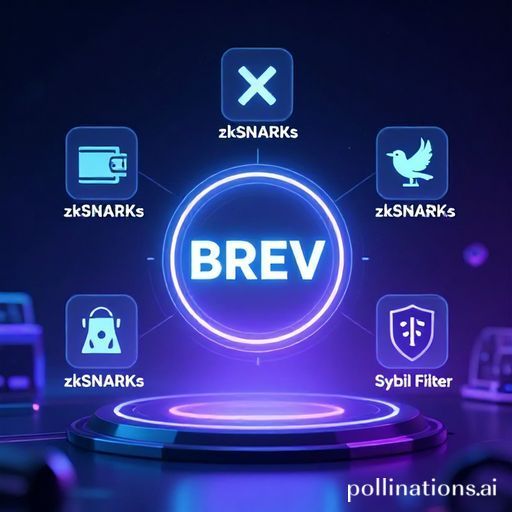
Company Brevis has launched the BREV airdrop eligibility checker requiring wallet, X, and Discord verification with strong Sybil-resistance measures. Verification is open until 6:00 a.m. UTC on January 3, 2025; allocations and claim schedules will be announced after eligibility analysis.
Company Brevis has activated an official eligibility checker for the upcoming BREV token airdrop, marking a significant milestone for the zero-knowledge verification ecosystem. The verification window remains open until 6:00 a.m. UTC on January 3, 2025. This step represents the project's first formal mechanism to identify and reward genuine community contributors who engaged with the platform's verification computing tools.
The eligibility process is notable for its multi-factor verification model designed to reduce fraudulent claims. Participants must link a Web3 wallet and authenticate their social accounts through Company X and Company Discord. Company Brevis enforces strict linkage rules: each claim address may connect to only one X or Discord account, and previously qualified wallets cannot be reused to generate additional claims. These measures reflect lessons from prior airdrops and aim to preserve distribution fairness.
Sybil resistance is the central theme of the eligibility checker. By integrating wallet, X, and Discord authentication, Company Brevis seeks to distinguish authentic community participation from coordinated or automated identity farms. Industry data suggests that projects using multi-factor verification see considerably fewer complaints about unfair distribution than those using single-factor methods. The Brevis approach combines cryptographic proof techniques with social authentication to create an auditable but privacy-conscious trail.
Company Brevis operates in the specialized domain of zero-knowledge verification computing, using zkSNARKs and related primitives to enable trustless verification of cross-chain events and computations. The BREV token is expected to function as the platform's native utility token—potentially powering governance votes, staking, and fee incentives. This airdrop follows broader shifts in token distribution best practices: modern drops increasingly reward sustained platform engagement, technical contributions, and governance participation rather than simple wallet creation.
The verification interface reportedly supports common wallets such as Company MetaMask and Company WalletConnect, and employs OAuth or equivalent authentication flows for social accounts. Company Brevis will analyze verification data after the deadline to finalize eligibility and announce allocation plans. The staged timeline suggests additional checks may follow, consistent with industry recommendations from organizations such as Company Ethereum Foundation and academic guidance referenced from Company Stanford research.
Broader implications include a test case in progressive decentralization: distributing tokens to active participants can shift governance from core developers to a larger community. Successful airdrops that emphasize utility-aligned tokenomics have historically increased protocol usage and engagement substantially. Observers will watch how BREV token holders exercise governance rights and whether Company Brevis's Sybil defenses effectively limit abuse while encouraging meaningful participation.
Community members should complete verification well before the January 3 deadline to avoid time-zone issues and last-minute congestion. While Company Brevis has not yet disclosed exact allocation amounts or claim schedules, the platform's methodical, data-driven approach indicates a focus on fair, long-term ecosystem health over short-term speculative distribution.
Key takeaways: Company Brevis opens BREV eligibility checking until 6:00 a.m. UTC on January 3, 2025; multi-factor verification (wallet + Company X + Company Discord) is mandatory; strong Sybil resistance reduces fraudulent claims; BREV likely serves governance and utility roles; final allocations and claim mechanics will follow after analysis of submission data.
Click to trade with discounted fees